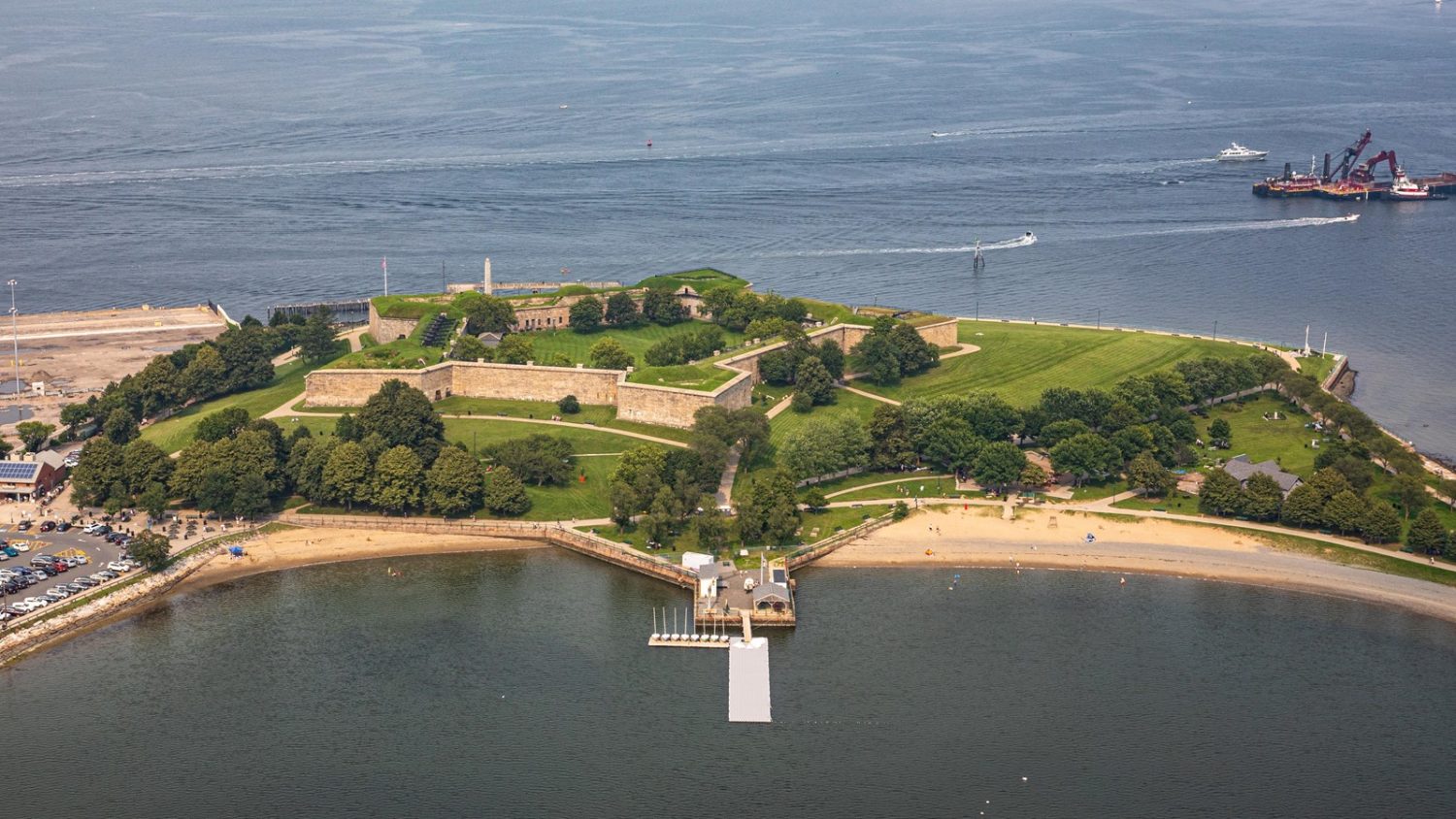
The above clear image came https://www.nps.gov/places/castle-island.htm#:~:text=Castle%20Island%20has%20been%20connected,Fort%20Independence%20and%20Castle%20Island.
Workers completed the current structure of Fort Independence in 1851. This marks the eighth version of the fort at this strategic location. This page focuses on the fort as it stands today on Castle Island. For the history of the other seven versions of the fort, check the History section on this website.
Laying The Foundation Of The Fort Independence
The original construction of the current Fort began in 1834. Colonel Thayer used over 172,687 blocks of cut and hammered granite. It took more than seventeen years to complete the project. The granite was cut from quarries in Rockport, MA. Wooden sailing sloops required heavy derricks to load and unload cargo. These sloops transported granite to Boston. This journey covered 35 to 40 nautical miles across open, dangerous ocean waters from Rockport to Boston.
Sylvanus Thayer: The Engineer Behind the Fort
Sylvanus Thayer, born in Braintree, MA, is known as “The Father of West Point.” He served at the US Military Academy from May 1817 to June 1833. After leaving West Point, Thayer spent the next 30 years as a chief engineer in the Boston area. He oversaw the construction of Fort Warren, Fort Independence, and a fort on Governors Island. These were key defense structures for Boston Harbor. Today, Fort Warren and Fort Independence are listed on the National Register of Historic Places. The expansion of Logan Airport in the 1920s destroyed Governors Island.
During the War of 1812, Thayer led the fortification and defense of Norfolk, Virginia, and was promoted to major. In 1815, he received $5,000 to travel to Europe, where he studied for two years at France’s École Polytechnique. While in Europe, he gathered science and math texts. Today, this collection is a valuable resource for math historians.
Thayer remained in the Army until 1863, retiring as a brigadier general after 55 years of service. His legacy extends beyond military engineering. He left his estate to Thayer Academy in Braintree and to the Thayer School of Engineering at Dartmouth College. In 1867, Thayer donated $30,000, which helped establish Dartmouth’s first Engineering School, opening in 1871. Initially, it accepted only three students. However, the program soon gained recognition and respect from both military and civilian groups. Dartmouth Engineering School is now one of the top engineering programs in the U.S.
Albert Baldwin Sailing Vessel
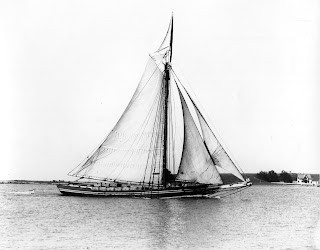
Albert Baldwin was one of several ships that carried heavy granite from Cape Ann to Boston for this project. A heavy derrick next to the boom lifted the bulky granite to shore. The boat could carry up to 200 tons of granite. To read more about Halibut Point and how workers shipped granite to various projects on the East Coast, visit https://halibutpointnotes.blogspot.com/2016/01/granite-at-wharf.html.
1970s Renovations
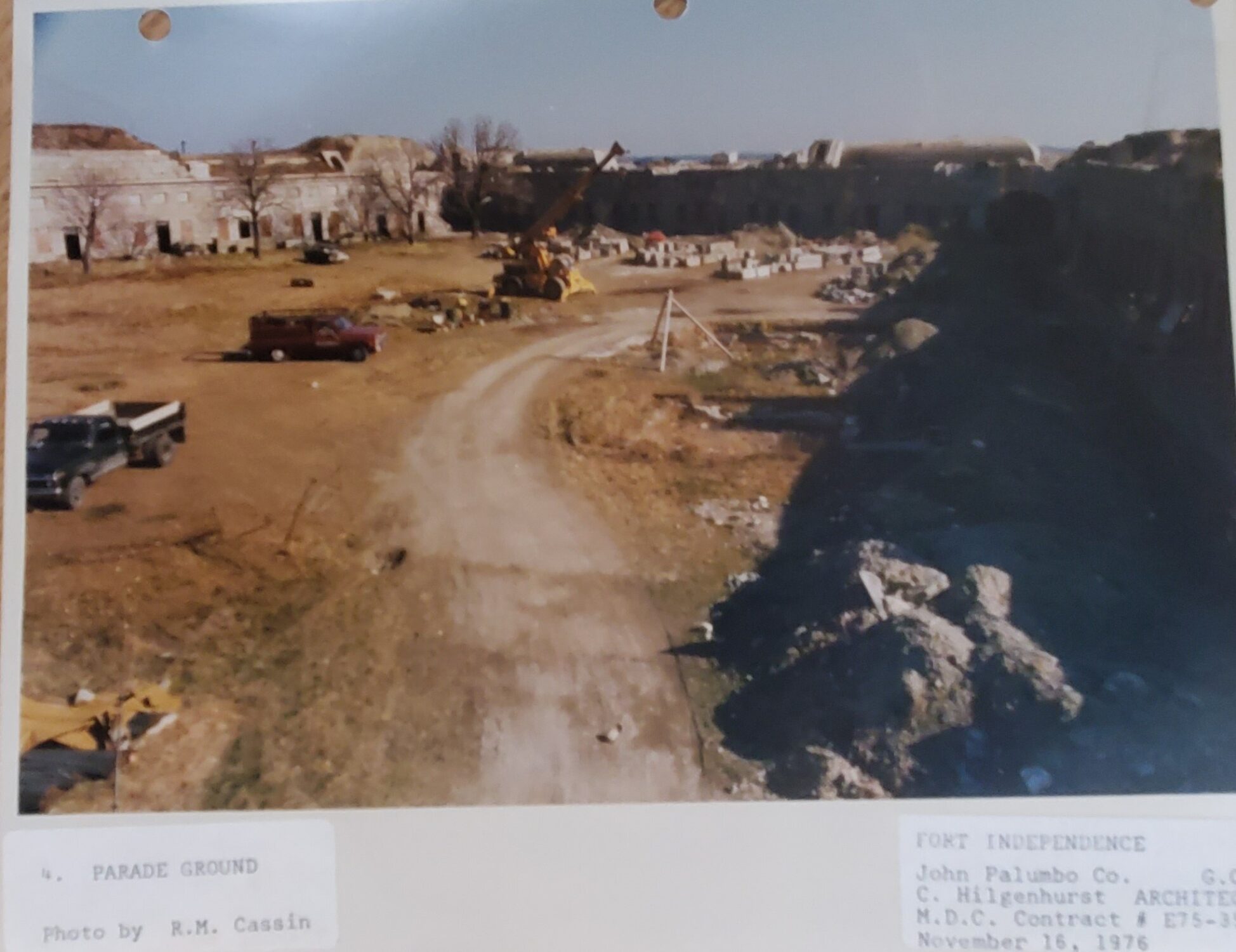
In 1977, the old Metropolitan District Commission renovated the fort and its area. The renovations involved major repairs and restoration. They mainly focused on the parade ground, bastions, and bakery. Today, Massachusetts and the DCR keep Fort Independence beautiful and inviting. They work hard to preserve it for all visitors. To see more images of the extensive work done during the 1970 renovations, visit my gallery.
Other Internal links for more enjoyable reading:
this link will show a video and images inside the Fort;
https://fortindependence.org/1977-renovations/
Resources used for this Article:
Castle Island and Fort Independence book by William Reid.
This book can be found at the Boston Public Library or purchased on online on amazon.com
https://www.masshist.org/object-of-the-month/objects/fort-independence-2005-06-01
https://www.polytechnique.edu/ecole/histoire/1794-1804-revolution-et-periode-napoleonienne
https://engineering.dartmouth.edu/about/history